Airbnb can be a good place to start if you are running a vacation rental business.
You get access to people who are already looking for accommodation, the booking process is already there, and you don't have to build your own audience before accepting the first guest.
But things can look different once the business starts growing.
You may start managing more properties. You may get repeat guests. People may begin searching for your business directly instead of finding you only through Airbnb.
At that point, one question usually comes up.
Should you continue depending completely on Airbnb, or should you have your own booking platform as well?
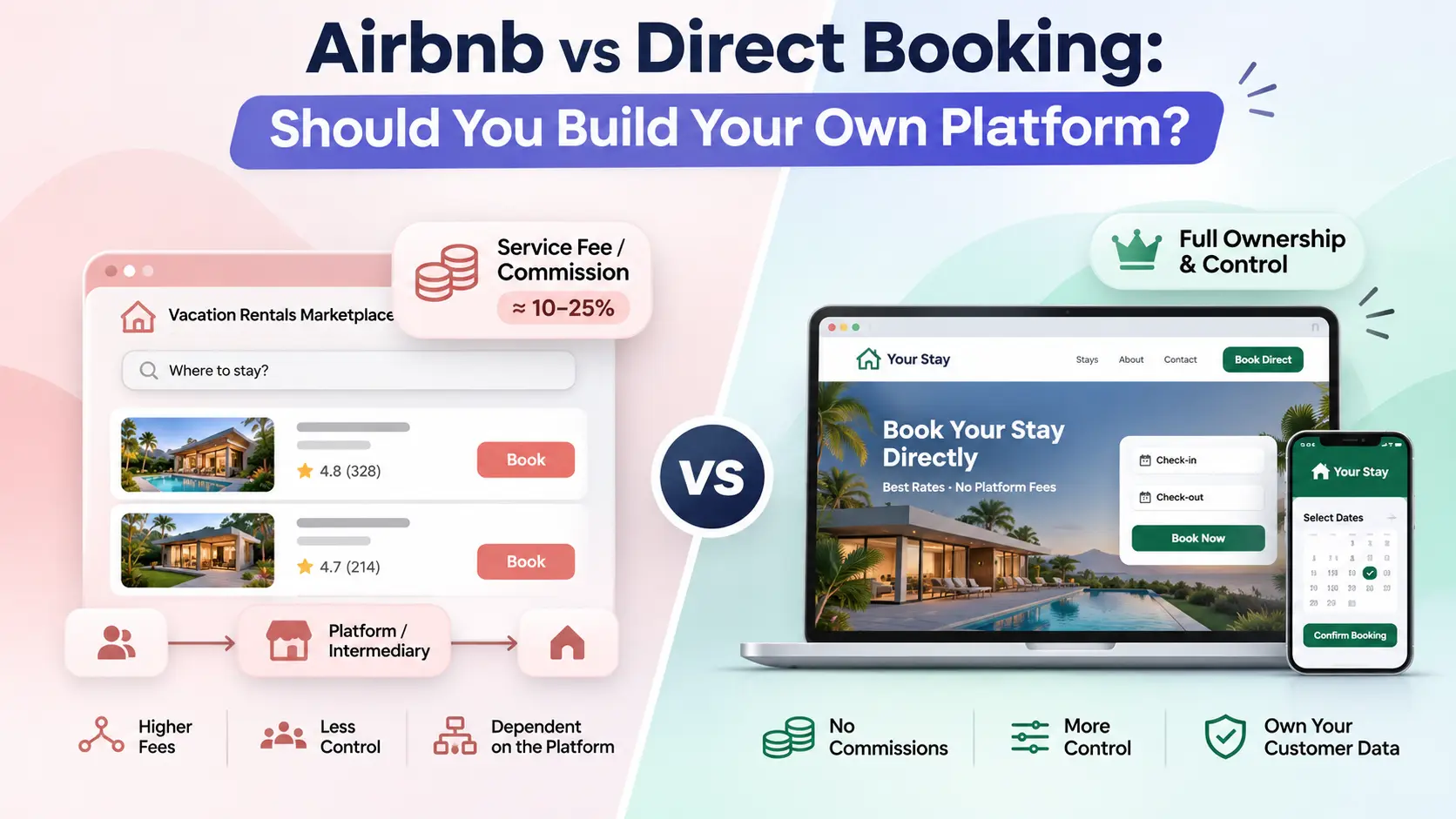
I don't think this has to be an Airbnb vs direct booking battle where you choose one and completely leave the other.
Both can work together.
If you are still at the early stage, you can also read our guide on how to start a vacation rental business before deciding how you want to accept bookings.
Let's look at where Airbnb has the advantage, where direct booking helps, and when having your own platform starts making sense.
What is direct booking?
Direct booking simply means a guest books with your business directly instead of completing the reservation through a third-party marketplace.
Let's say you manage 20 vacation homes in Florida.
A guest searches for a property on Google, visits your website, checks the dates and completes the booking there.
That is a direct booking.
Your platform handles the property details, availability, booking and payment instead of sending the customer to another marketplace.
But having a direct booking website doesn't mean you have to remove your Airbnb listings.
You can use both.
Where Airbnb has the advantage
The biggest advantage is simple.
Airbnb already has the audience.
People visit the platform specifically because they are looking for accommodation.
If you launch your own website tomorrow, you don't automatically get that traffic.
You have to earn it.
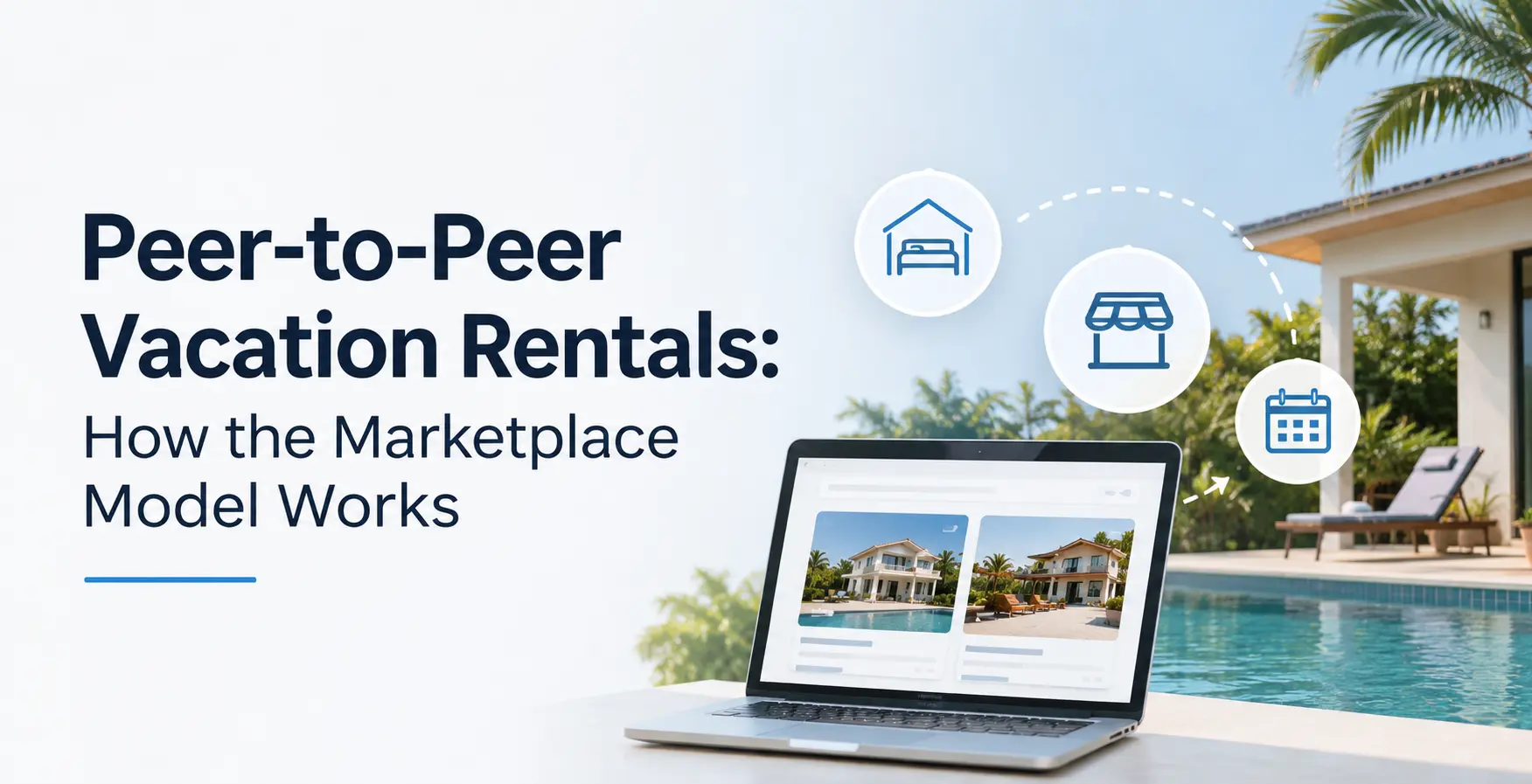
Airbnb also gives hosts an existing booking system, payment infrastructure, reviews, messaging and customer support.
For someone who has one or two properties and no existing customer base, this can make getting started much easier.
There is also trust.
Many travellers already know how Airbnb works and may feel comfortable booking through a platform they have used before.
So there is real value in listing there.
The question is whether it should be the only place where people can book your properties.
Airbnb service fees can add up as you grow
This is usually one of the main reasons property owners start looking at direct booking.
Airbnb changed its fee structure in 2026.
At the time of writing, Airbnb says most hosts pay a single 15.5% service fee, although exceptions apply in some markets.
If you are getting a few bookings every month, you may simply consider this part of the cost of using Airbnb.
But imagine managing 30 or 50 properties.
The numbers start becoming much more important.
That doesn't mean your own booking platform is free.
You may still pay for payment processing, hosting, emails, SMS, maintenance, marketing and other services.
But you can see and control those costs differently.
This is why I would compare the complete cost of getting a booking through each channel instead of looking only at Airbnb's service fee.
You don't control Airbnb search visibility
If you list your property on Airbnb, you can do many things to improve the performance of the listing.
You can,
- improve the photos.
- keep the calendar updated.
- price the property properly.
- respond to guests quickly.
- work on getting good reviews.
Airbnb itself explains that factors such as quality, popularity, price and location can influence how listings appear in Airbnb search results.
So the ranking is not completely outside your influence.
But it is still Airbnb's search system.
You do not decide how the algorithm works or when it changes.
Let's say Airbnb is responsible for most of your bookings and your listing starts receiving less visibility.
Your business can feel that change immediately.
Having your own website gives you another place to generate bookings instead of depending completely on one marketplace.
When someone books through Airbnb, the reservation operates within Airbnb's platform and policies.
Again, that is completely normal for a marketplace.
Airbnb has rules around communication, payments and off-platform bookings. For example, its current payment and off-platform policy generally requires pre-booking communication and booking payments to remain on the platform.
When a customer books directly through your own platform, you control more of that relationship.
You can build your own email list.
You can communicate with previous guests.
You can create offers for returning customers.
You can recommend another property.
You can build a loyalty programme later if that makes sense for your business.
This becomes more valuable as the business grows.
A guest who stays with you once doesn't necessarily have to become a one-time customer.
You control your own brand and booking experience
This is another major difference.
When someone books through Airbnb, your property has its own photos, description and reviews.
But the overall platform still looks and works like Airbnb.
With your own platform, the experience belongs to your business.
You decide how the properties are presented, what information appears on the listing page, how guests search, how the booking process works and which payment methods you support.
This is especially useful when your rental business has a specific model.
Either you are planning to rent only luxury villas or beach properties or maybe you want to create a marketplace where other hosts can register and list their properties.
In these cases, having control over the complete platform can become much more important.
Direct booking also has a big challenge
Launching a website does not mean bookings will automatically start coming in.
This is something people sometimes overlook.
Airbnb already has millions of people looking for accommodation.
Your new website doesn't.
You still need to bring visitors through channels such as Google search, social media, repeat guests, referrals, partnerships and other marketing activities.
This is why someone with one property and no existing audience may not need to rush into building a large platform.
Airbnb may be solving the biggest problem they currently have - finding customers.
But let's say you already manage 30 properties, have a customer database and get repeat bookings every month.
Now the calculation becomes very different.
You already have people who know your business.
Giving them a direct way to book starts making much more sense.
Do you have to stop using Airbnb?
No, you don’t have to.
Building your own booking platform doesn't mean deleting all your Airbnb listings the next day.
You can use Airbnb as one booking channel while developing your direct bookings at the same time.
For example, Airbnb can continue bringing new customers.
Your own website can get bookings through Google, social media, referrals and customers who already know your brand.
Over time, you can see where the bookings are coming from and which channels are working better for you.
I actually think this is a more practical approach than trying to replace Airbnb overnight.
You are not putting the entire business in one place.
There isn't a magic number of properties where everyone suddenly needs their own platform.
But there are a few situations where I would seriously consider it.
If you manage multiple properties under one brand, have repeat guests, already promote your properties outside Airbnb or want more control over the booking process, a direct platform becomes more useful.
Also, if you feel you want to avoid the huge service fee charged by Airbnb, that’s where your own booking platform can help you.
It also makes sense if you are planning something bigger than managing your own properties.
For example, if your goal is to create a multi-host marketplace where different property owners can register and list their rentals, you need much more than a normal direct booking website.
You need host registration, property management, availability, bookings, payouts, commissions and admin controls.
At that point, you are building your own vacation rental marketplace.
You generally have two options.
Build it from scratch
With custom development, you build the platform around your exact requirements.
This gives you a lot of flexibility.
But there is also more work involved.
You need to design and develop search, property listings, calendars, bookings, payments, messaging, user accounts, host management and the admin panel.
If you also need Android and iOS apps, that adds another part to the project.
For this, you have to hire an entire team which cost you around $70,000 to $90,000. Additionally, you have manage them and it takes 9 to 12 months to launch website and mobile apps.
Custom development makes sense when your business has workflows that are very different from what existing platforms can handle.
We have explained this in more detail in our comparison of custom development vs a readymade Airbnb clone.
The second option is to start with a platform where all the features required to launch a vacation rental platform is already built.
On top of the readymade platform, you work on the branding, payment setup, integrations and any custom features required for your business.
This is useful when your business model follows a fairly standard vacation rental marketplace structure and you don't want to build every basic feature again.
With readymade solution, you can launch your website and mobile apps between $2000 to $3000.
If development resources are one of your concerns, we also have a separate guide explaining how to build an Airbnb clone without a full development team.
Whichever option you choose, don't look only at the feature list.
Check the technology stack, pricing, source code, customization options, etc
Where does GlyphStay fit?
GlyphStay Airbnb clone is our readymade vacation rental marketplace.
You can use GlyphStay Airbnb clone and launch your own platform like Airbnb.
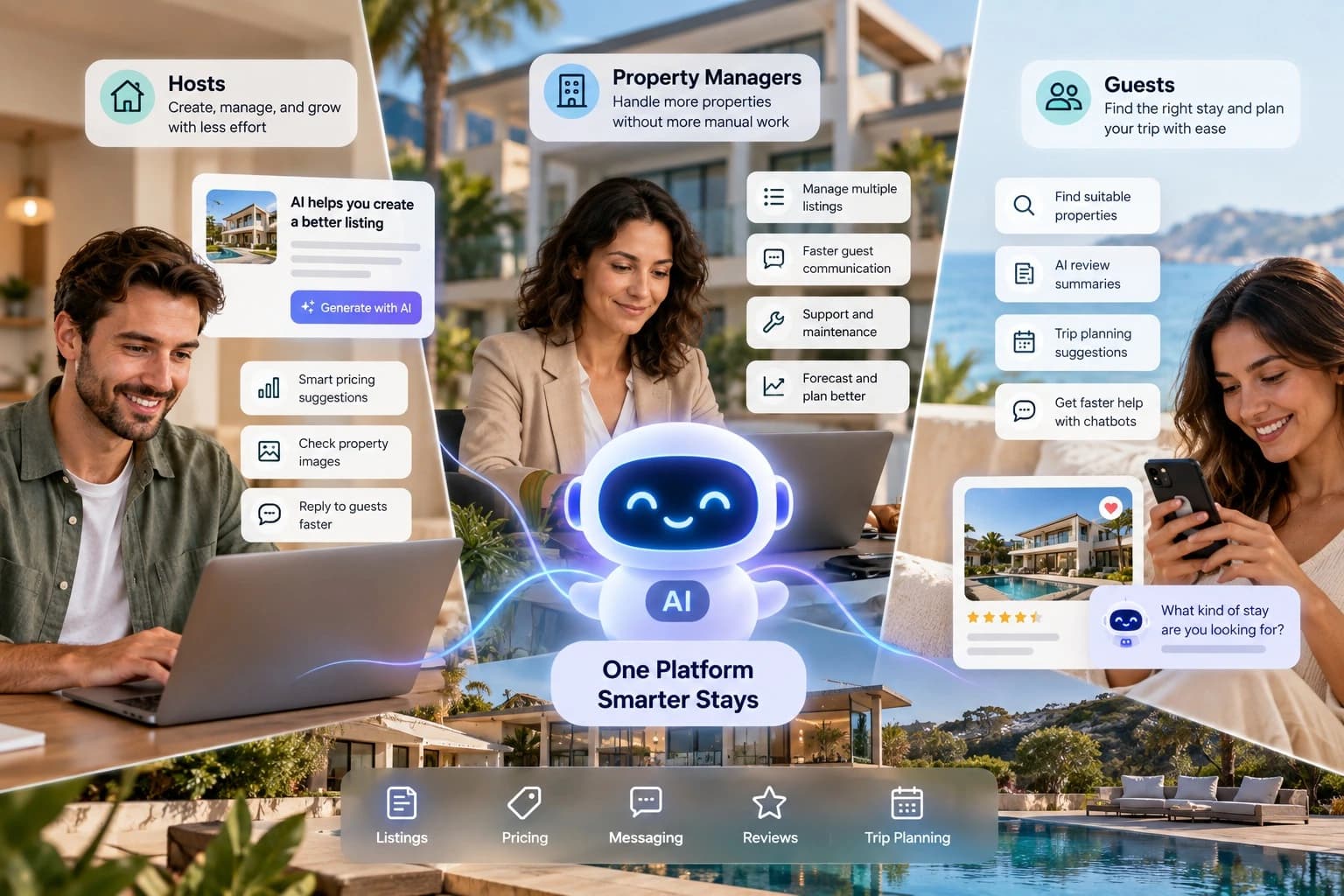
It has all the essential features for guests, hosts and admin including property listings, search, availability, bookings, payments, messaging and reviews.
It also includes a web platform, Android and iOS apps and an admin panel.
The idea is not that every Airbnb host needs GlyphStay.
If someone rents one property occasionally, Airbnb alone may already be enough for what they need.
GlyphStay makes more sense when you want to build your own rental brand, manage multiple properties or create a marketplace like Airbnb, where different hosts can list their properties.
You get the platform and 100% source code, and the product can also be customized based on your business.
Airbnb vs direct booking: which one should you choose?
I wouldn't call one the winner because they solve different problems.
Airbnb gives you distribution whereas your own booking platform gives you control.
If you are just starting without an audience, Airbnb can be an important source of bookings.
If you already have a rental business and want more control over your brand, customers and booking process, it makes sense to start building a direct channel as well.
And you can use both as well.
For many vacation rental businesses, that is probably more practical than depending completely on either one.
Takeaway
Airbnb can help you get in front of travellers without building your own audience from scratch.
There is real value in that.
But as your rental business grows, relying completely on one marketplace is hard.
Having your own booking platform gives you another channel that belongs to your business.
You can work on your own brand, direct traffic, repeat bookings and the complete customer experience.
You don't have to change everything at once.
Start by checking where your bookings come from today, how much each channel costs you and whether people already know your brand outside Airbnb.
That should give you a better idea of whether it is time to build your own booking channel.
Want to see what a complete vacation rental marketplace looks like? Explore GlyphStay Airbnb clone or contact us to discuss your vacation rental business.