Starting an online marketplace is an interesting idea because you do not always need to own anything. It can be the products, properties, vehicles, or services being sold.
But finding the right idea is usually the tricky part here.
You may have an idea that sounds good, but are there enough people willing to sell or provide it?
It’s a million-dollar question you have to ask yourself before you start a business.
Think first: Are customers already looking for it? And most importantly, is there a real problem your marketplace can solve?
That is what you should look at first.
A good marketplace brings two or more sides together and makes something easier than it is today.
That could be finding a holiday home, hiring a local professional, renting equipment, buying used products, or finding a supplier for a business.
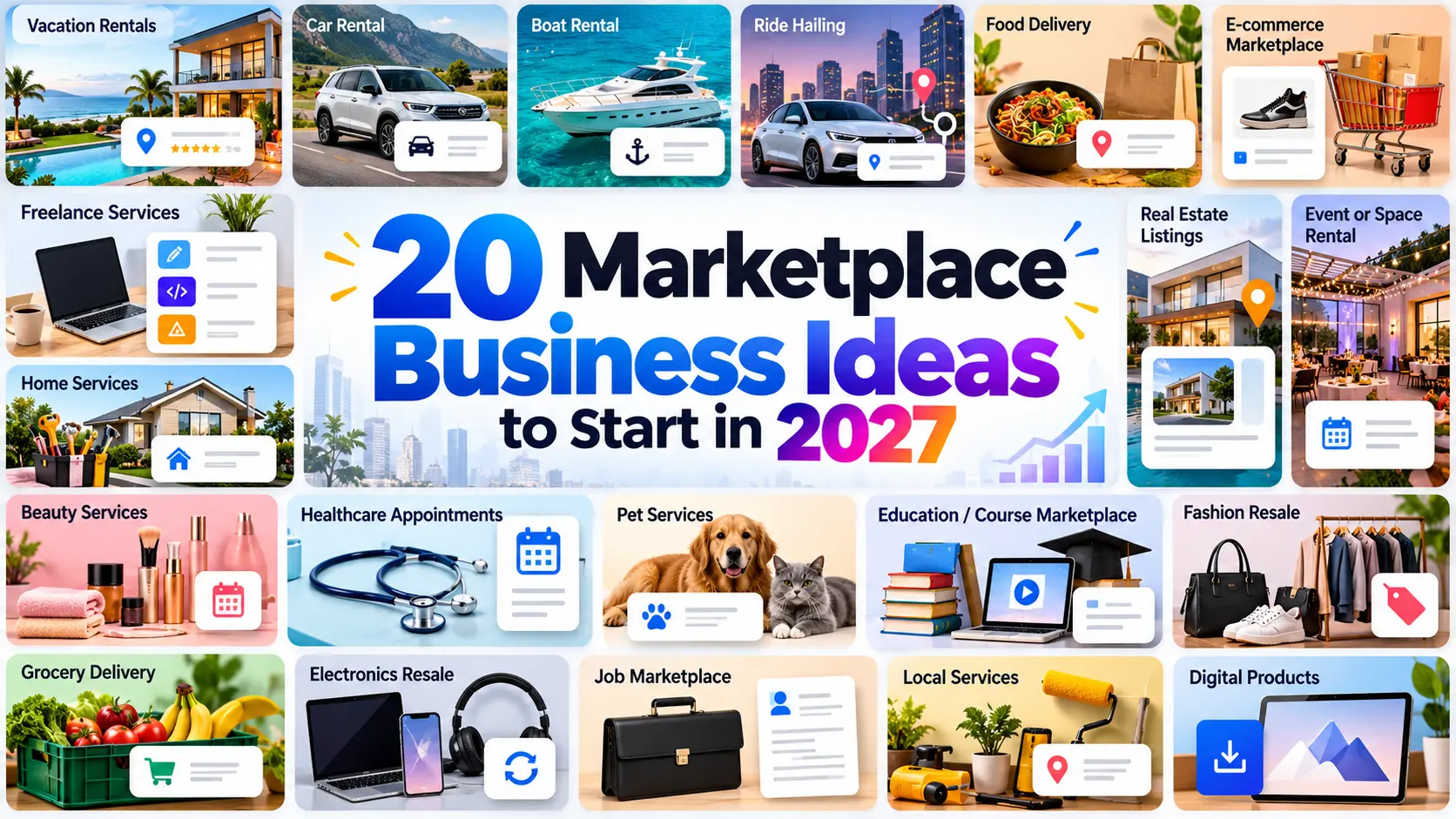
Here are 20 marketplace business ideas worth looking at for 2027.
20 marketplace business ideas for 2027
1) Vacation rental marketplace
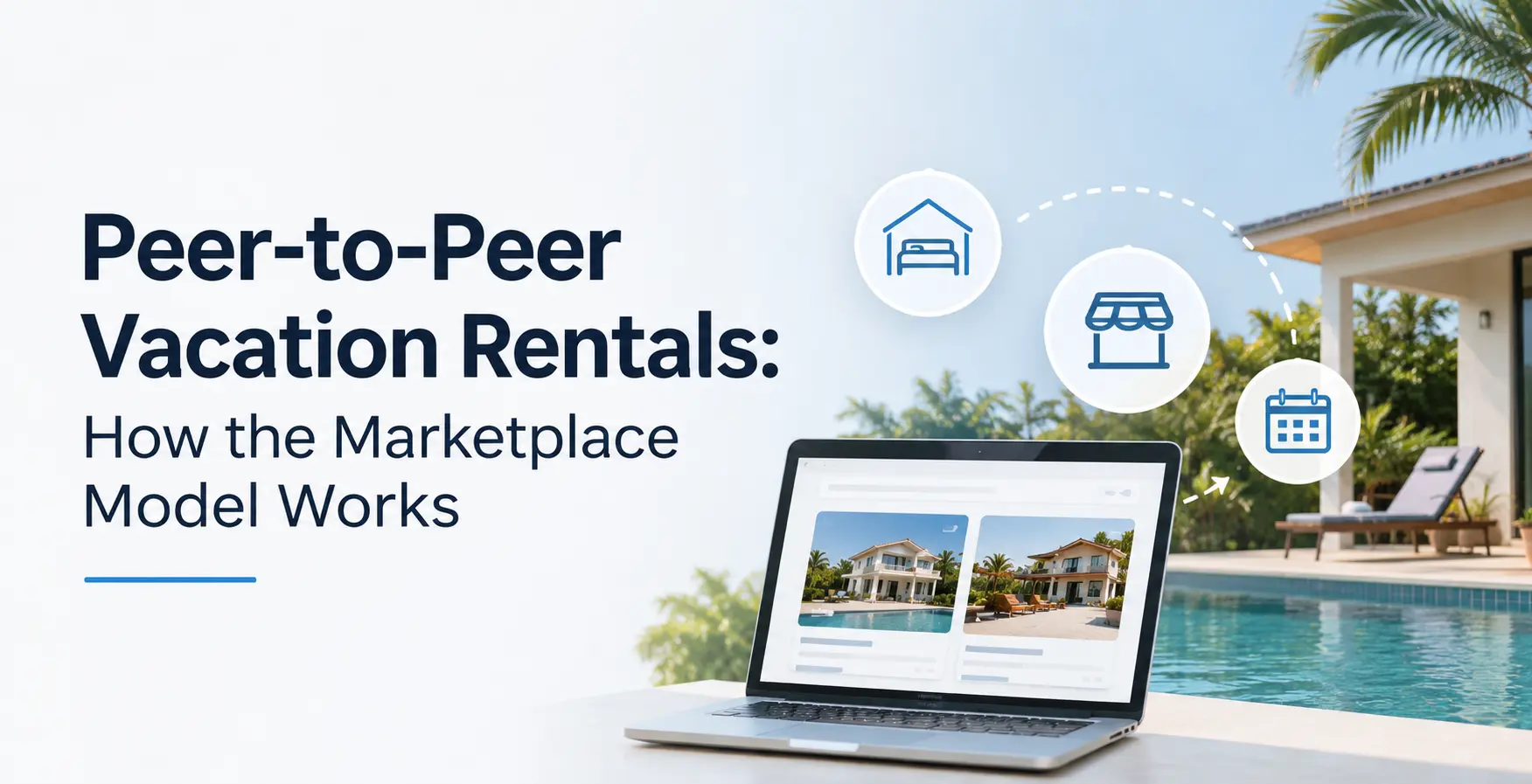
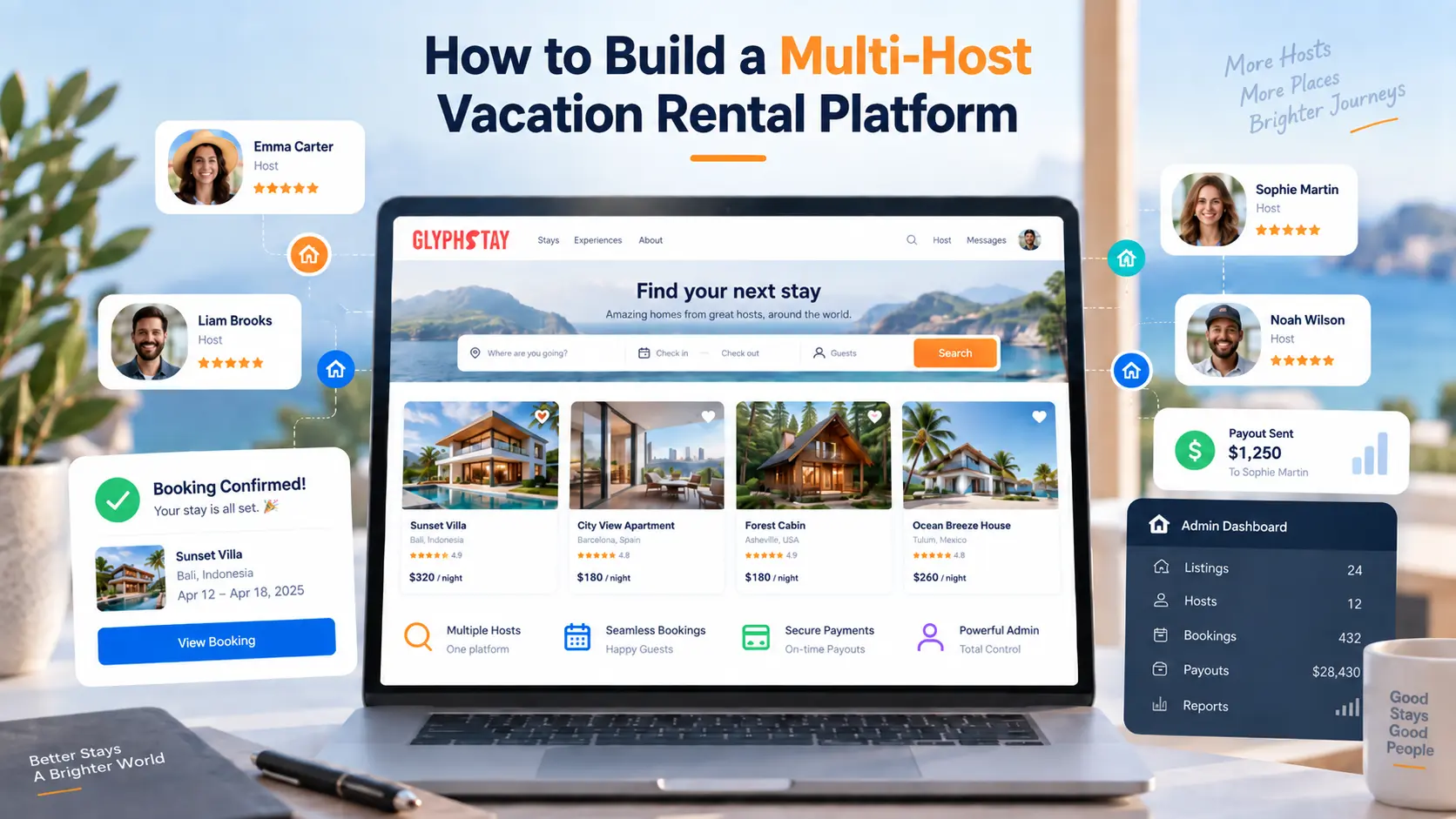
A vacation rental marketplace is a platform that connects property owners (hosts) with travelers (guests) looking for short-term stays.
Hosts can list apartments, villas, cabins, holiday homes, or other properties. Guests search by location and dates and book the property they want.
The platform can make money by charging hosts, guests, or both when a booking is completed.
You can also make the idea more specific. Instead of covering every type of accommodation, you could focus on beach houses, luxury villas, pet-friendly stays, farm stays, or a particular country or region.
2) Boat rental marketplace
Boats are expensive assets and they are often unused for long periods.
A boat rental marketplace gives owners a way to earn from that idle time while helping renters find boats without contacting individual operators one by one.
You could support hourly trips, full-day rentals, fishing boats, yachts, party boats, or rentals with and without a captain.
The platform can earn a commission from each booking.
3) Peer-to-peer car rental marketplace
Many privately owned cars spend most of the day parked.
A peer-to-peer car rental marketplace lets owners list those vehicles and allows renters to book them for a few hours or several days.
You could build around normal cars, luxury cars, electric vehicles, vans, or even vehicles for tourists in a specific destination.
Apart from booking commission, the platform could earn from additional services where they fit the business model.
4) Space and venue rental marketplace
Finding the right venue often means visiting several websites, sending messages, and waiting for availability confirmation.
A space rental marketplace can bring those options into one place.
Hosts could list,
- meeting rooms
- photography studios
- party halls
- rooftops
- coworking spaces
- wedding venues
- sports spaces
The platform can support hourly or daily bookings and earn from each reservation.
5) Equipment rental marketplace
People and businesses often need equipment for a short period without wanting to buy it.
That creates room for marketplaces around construction equipment, cameras, tools, camping gear, event equipment, farming machinery, or industrial equipment.
An equipment marketplace connects owners with people who need those assets temporarily.
This can work particularly well when the equipment is expensive to buy but only needed occasionally.
6) Parking and storage marketplace
Unused parking spaces, garages, warehouses, and storage areas can become rentable inventory.
Someone living near an airport, railway station, business district, or stadium may have unused parking space. A business may have warehouse capacity it does not use all year.
A marketplace can connect that available space with people looking for parking or storage nearby.
The platform earns when a booking happens.
7) Home services marketplace
Finding a trusted plumber, electrician, cleaner, painter, or handyman can still be surprisingly difficult in many locations.
Customers and including me, often rely on friends, local groups, or multiple phone calls.
A home services marketplace can allow professionals to create profiles, list their services, show availability, receive requests, and collect reviews.
You could start with one service or offer several related services in one city.
8) Pet care marketplace
Pet owners need help with walking, sitting, grooming, boarding, and sometimes transportation.
A pet care marketplace connects pet owners with local service providers.
Trust matters a lot here, so profiles, reviews, availability, experience, and clear service details would be important.
The marketplace could charge a percentage from each completed booking.
9) Tutor and skills marketplace
Students and working professionals are constantly learning new skills.
A marketplace could connect them with tutors offering language classes, school subjects, coding lessons, music training, career coaching, or professional skills.
The platform could support one-to-one sessions, group classes, online sessions, or local lessons.
You could earn from session bookings or tutor subscriptions.
10) AI experts and automation marketplace
Businesses are interested in AI, but many do not know how to actually use it in their daily work.
They may need someone to build an AI workflow, automate repetitive tasks, connect existing tools, train their team, or create a custom assistant.
The problem is that finding someone with the right experience can be difficult.
A specialised marketplace could connect businesses with AI consultants, automation specialists, developers, and trainers.
This is one marketplace idea where focusing on a narrow business problem may work better than creating another general freelance platform.
11) Niche freelance marketplace
You do not have to build a marketplace for every type of freelancer.
A narrower marketplace can focus on one profession or industry.
For example:
- video editors for YouTubers
- designers for restaurants
- translators for legal documents
- developers for ecommerce stores
- photographers for property businesses
A niche makes it easier for customers to find someone relevant and makes it easier for providers to stand out.
The platform can charge a commission or subscription.
12) Event services marketplace
Planning an event normally requires dealing with several different vendors.
You may need a photographer, decorator, caterer, DJ, makeup artist, venue, entertainer, and equipment provider.
An event services marketplace can bring these providers into one place.
Customers could search based on location, event type, availability, price, and reviews.
You could begin with weddings or corporate events before expanding into other categories.
13) B2B supplier marketplace
Many businesses still find suppliers through sales representatives, referrals, trade shows, phone calls, and spreadsheets.
There is an opportunity when buyers struggle to compare several suppliers in one place.
A B2B marketplace could focus on restaurant supplies, hotel products, packaging, building materials, industrial components, uniforms, office supplies, or another specific industry.
You do not need to start with every B2B category. One fragmented industry can be enough.
14) Construction materials marketplace
Construction companies regularly need materials from different suppliers.
At the same time, suppliers and contractors may have excess materials left after projects.
A marketplace could help contractors find new materials, surplus stock, or local suppliers.
The value here comes from making it easier to find availability and compare options without contacting several businesses individually.
For B2B marketplaces, large or repeat transactions can make even a relatively small number of active buyers valuable.
15) Used fashion marketplace
Resale is no longer limited to local secondhand stores.
Customers are increasingly comfortable buying used clothing, bags, shoes, and accessories online for a low price.
A marketplace can allow individuals or professional sellers to list products and sell them to other users.
You could narrow the idea to luxury products, children's clothing, streetwear, designer bags, vintage fashion, or another specific category.
Authentication, seller reputation, product condition, and good images become particularly important here.
16) Refurbished electronics marketplace
Many people want a good phone, laptop, tablet, or gaming device without paying full retail price.
The problem is trust.
What condition is the device in? Has it been repaired properly? Is the battery healthy? Is there any warranty?
A specialised refurbished electronics marketplace can solve some of these concerns by setting listing standards and working with verified sellers or refurbishers.
The marketplace could make money from each sale, seller plans, or promoted products.
17) Creator services marketplace
Businesses increasingly need short videos, product demonstrations, voiceovers, photography, and social content.
At the same time, many independent creators are looking for paid work.
A creator marketplace can connect businesses directly with creators based on content type, location, audience, language, or industry.
Instead of focusing only on large influencers, you could build around smaller creators who produce content for brands.
18) Digital asset marketplace
Not every marketplace has to deal with something physical.
Designers, developers, and creators can sell digital products such as:
- website templates
- UI kits
- graphics
- icons
- presentation templates
- 3D models
- video assets
- code components
The seller creates the product once and can sell it many times.
The marketplace handles discovery, payment, delivery, reviews, and seller management.
19) Multi-restaurant food delivery marketplace
A food delivery marketplace connects customers, restaurants, and delivery riders.
Restaurants join the platform and add their menus. Customers find nearby restaurants and place orders. Riders handle pickup and delivery.
Unlike a simple restaurant ordering website, a marketplace can bring many restaurants onto the same platform.
Revenue can come from restaurant commission, delivery charges, service fees, subscriptions, or promoted restaurant placements.
20) Local ride-hailing marketplace
Ride-hailing is another marketplace model where supply and demand have to meet at the right time.
Drivers provide the rides, passengers request them, and the platform handles matching, fares, trip management, and payments where required.
Trying to compete everywhere at once would be difficult.
But there may be room for a platform focused on a particular city, region, airport route, business transport requirement, women's transportation service, or another underserved niche.
The business can earn a commission from completed trips.